







EY WADE~ Entertaining Your World And Designing Eternity


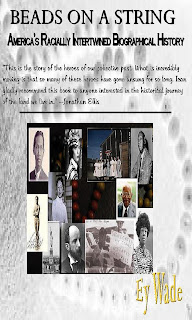
BEADS ON A STRING-America's Racially Intertwined Biographical History book. The first to include Sarah Collins Rudolph,the 5th and forgotten little girl in the Birmingham Church Bombing, into the pages of history.

WADE-IN PUBLISHING.COM Fiction and non-fiction that expounds on topics we all discuss within the comforting tight circles of our closest friends. Topics such as race, children books, family, personal relations, the welfare system, old school child rearing and childcare. E-book publications. Novels that make you ask.... AM I REALLY THE PERSON I CLAIM TO BE?
I
Quas molestias excepturi

Debney Nichole Armstrong's Journal of Lies

Truculent and defiant teenagers are not unusual, but ones that have to face one tragedy after another and deal with the consequences of their reaction to them are not.

Quas molestias excepturi
Impedit quo minus id

Impedit quo minus id

At vero eos et accusamus et iusto odio dignissimos ducimus qui blanditiis praesentium voluptatum...

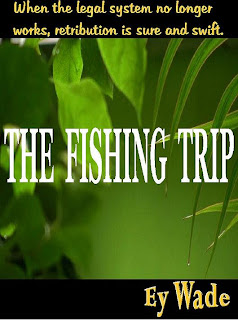
The Fishing Trip

When do you cross the line from being the 'hero' to be coming the monster? Durham killed his abuser at the age of ten. As an adult and tired of pedophiles having free reign on innocent children, he decides to take the law into his own hands. His fishing excursions are to die for.

Impedit quo minus id
Voluptates repudiandae kon

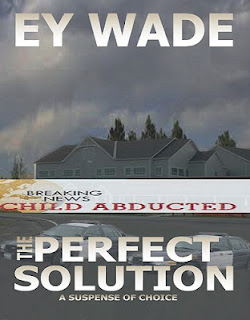
THE PERFECT SOLUTION-A Suspense of Choices

"I placed the most precious thing in my life in your hands and you people did not take your job seriously." Anger destroys a relationship.;A teenaged babysitter decides to go to college. A single parent places her child in daycare. A three year old is mistakenly given to a stalker by his pre-school teacher. A suspenseful analysis of choices and how those choices affect the people around us.

Voluptates repudiandae kon

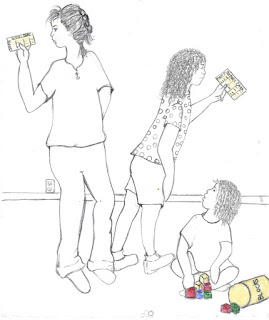
THE KID'S CORNER- BETWEEN THE TWO OF THEM

"Gillean is the middle daughter. She sometimes feels neglected and left out. Between the Two of Them explores the advantages and disadvantages of being the middle child and shows how Gillean discovers she has a special 'uniqueness' in the family."

Voluptates repudiandae kon

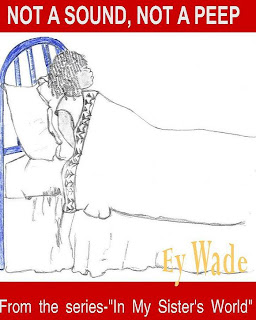
THE KID'S CORNER- NOT A SOUND NOT A PEEP

NOT A SOUND, NOT A PEEP shows how the family in prose and illustrations handles the nightmares of Mhia, the youngest child in the family.

Voluptates repudiandae kon

THE KID'S CORNER- WHO WILL HUG THE SUN

Mhia is so upset about not being able to hug the sun her mom tell her the story of the antics the sun goes through to get a hug and she learns a little science in the end. Who Will Hug the Sun is part of a series of picture books titled IN MY SISTER’S WORLD

Voluptates repudiandae kon
Mauris euismod rhoncus tortor

BEADS ON A STRING AMERICA'S RACIALLY INTERTWINED BIOGRAPHICAL HISTORY

Ever wondered what America's history would look like if every race was included in one book? Celebrated daily? History was written in more than Black and White and Beads on a String-America’s Racially Intertwined Biographical History lauds loudly the accomplishments of all races that helped make America the great country it has become. America’s glorious multi-racial history is finally acknowledged.

Mauris euismod rhoncus tortor

SHARE THE KNOWLEDGE

Showing posts with label self-publishing. Show all posts
I tend to believe the use of a comma is not what it was meant to be. Some people tend to use it as a breathing spot for their characters when writing a novel. While others just place it haphazardly all across a page, spawning like the birth of rabbits. I believe less is better. To me, a comma is a pause in thought or a yield in the reading process.  So, what's your take on commas?


When NOT to Use a Comma

by admin on March 19, 2011
One of the most common mistakes writers make is to insert commas where they are not needed. Because the comma is so helpful and its uses so varied, many writers sprinkle them liberally throughout their text – even when they do not quite belong. But however unassuming they seem, a misplaced comma can lead to embarrassing shifts in the meaning of a sentence – sometimes comical but other times disastrous.
While there are always exceptions to every rule, the following pointers provide a general guideline for when NOT to use a comma in your writing (all incorrect examples of sentences are in italics)
http://www.book-editing-services.com.
• No commas to connect verbs: There is no need to use a comma to separate the verb from the rest of the sentence. In the following example, the comma is incorrect: “The author carefully reviewed, the long manuscript.” Take out that comma after “reviewed” and keep your verbs connected.
• No comma between independent clauses: When you have two clauses that could stand alone (independent clauses) and you wish to show a close relationship between them, link them with other punctuation or with a conjunction, depending on the meaning you are going for. Avoid linking them with a comma, as shown incorrectly here: “There was a knock at the door, the author stopped writing.” This is known as a comma splice and should only be used in very rare cases between very short, equally weighted clauses: “I came, I saw, I conquered.” The following text shows just some solutions for repairing the comma splice in the previous example. Each option changes the meaning subtly.
o Add a semi-colon: “There was a knock at the door; the author stopped writing.”
o Add a coordinating conjunction: “There was a knock at the door, and the author stopped writing.”
o Add a subordinating conjunction: “There was a knock at the door, so the author stopped writing.”
o Add a long dash: “There was a knock at the door—the author stopped writing.”
• No comma between two actions performed by one subject: When two actions are made by the same subject, the general rule is that they should not be separated by comma. For example, “The author opened the door, and looked outside,” is incorrect. Exceptions to this rule are when there are three or more actions, because in this case the actions form a list (and therefore take commas). For example, “The author opened the door, looked outside, and found the parcel.”
• No comma between two subjects performing the same action: Just as two actions by the same subject should not be separated, two subjects (a compound subject) simultaneously taking the same action should not be separated either. For example, “The author, and his editor worked all through the night” is incorrect. But again, when there are three or more subjects this forms a list of items which should be separated by commas: “The author, his wife, and his editor worked all through the night.”
• No commas to separate restrictive clauses: It is a good idea to learn how to recognize restrictive clauses versus non-restrictive clauses in a sentence. These clauses both give a little more information about the subject of the sentence, but non-restrictive clauses, which often start with “which” as this clause did, are parenthetical (non-essential) information and should be surrounded by commas. “The puppy, which was sleeping on the pile of papers, had chewed the manuscript to pieces.” In this sentence, the information about where the puppy is sleeping is not essential to understanding the sentence and could be removed (non-essential) without affecting the main clause.
On the other hand, a restrictive clause takes no commas because it is essential to the rest of the sentence (this type of information is often introduced with a “that”). For example, this is incorrect: “The puppy, that was sleeping on the pile of papers, had chewed the manuscript to pieces.” Remove both commas, because while this is a similar sentence it implies there might be other puppies in the room and we are only talking about that puppy: the one on the papers. When you add information to describe one particular subject (among possible others), it should not be separated by commas.
These are some good general rules to keep in mind when writing. Remember, knowing the rules (and when they can be broken) adds to your writer’s “toolkit.” By learning the basic grammar and punctuation rules, you can add layers and subtleties to your writing that would not have been possible otherwise – an important step on the journey to becoming a professional writer.
Posted by Ey Wade
February is almost over and I know I'm a little behind in my 28days 26 letter celebration of 365 days of recognition. These are some of the greats- letters P-L. Remember history was written in more than Black & White. Take the time to learn about the sacrifices of the people who have made life easier for the rest of us.

SENGBE PIEH (later known as Joseph Cinqué) born in 1815 in what is now Sierra Leone.  Cinqué was a West African man of the Mende tribe who was the most prominent defendant in the Amistad case, in which it was proved that he and 52 others had been victims of the illegal Atlantic slave trade.

RANDOLPH, ASA PHILIP born April 15, 1889 in Crescent City, Florida was a socialist in the labor movement and the US civil rights movement. Randolph emerged as one of the most visible spokespersons for African-American civil rights. In 1941, he, Bayard Rustin, and A. J. Muste proposed a March on Washington to protest racial discrimination in the armed forces. The March was cancelled after President of the United States Franklin D. Roosevelt issued the Fair Employment Act. Randolph's efforts on behalf of the Brotherhood of Sleeping Car Porters were portrayed in the Robert Townsend film "10,000 Black Men Named George". All the African-American workers in the Pullman Company were addressed as "George" after George Pullman.


Organizations


CHINESE AMERICAN CITIZENS ALLIANCE (CACA) is a Chinese American political organization founded in 1895 in San Francisco, California to secure equal rights for Americans of Chinese ancestry. It was originally named the Native Sons of the Golden State and changed to its present name in 1904. The Chinese Times, founded in 1924, became the official newspaper of the Alliance. The Chinese American Citizens Alliance La Lodge Youth Council (YC) was formed in August 2001 and is a subsidiary of the Chinese American Citizens Alliance. It was created in response to the growing number of students seeking college entry counseling. Membership currently consists of high school students, college students, and recent college graduates residing in the West and East San Gabriel Valley.

THE STUDENT NONVIOLENT COORDINATING COMMITTEE (SNCC, pronounced "snick") was one of the principal organizations of the American Civil Rights Movement in the 1960s. It was founded to help organize the student sit-ins, to fight segregation in restaurants and other public areas. It emerged in April of 1960 from student meetings led by Ella Baker held at Shaw University in Raleigh, North Carolina. Ella Baker had been the Southern Christian Leadership Conference director before helping form SNCC, but this did not mean SNCC was a branch of SCLC. Instead of being closely tied to SCLC or other groups such as the NAACP as a youth division, SNCC sought to stand on its own. Two hundred black students were present at the first meeting, including Stokely Carmichael from Howard University. He would later head SNCC's militant branch after the group split in two in the late 1960s. SNCC members were referred to as "shock troops of the revolution."

The SNCC eventually aimed to make changes in individual local communities rather than on a national scale, in the case of the SCLC. It was also the most militant of all of the black civil rights organizations which led to tensions with the peaceful SCLC despite its name including "Non-Violent". The SNCC was also committed, as were the other black organizations to convincing blacks to register to vote, as each organization realized that if the blacks didn't vote the government would not be representative of them. The SNCC ran a major campaign during the early 1960s in an attempt to get blacks to register to work.
SNCC played a leading role in the Freedom Rides, the 1963 March on Washington, Mississippi Freedom Summer and the Mississippi Freedom Democratic Party over the next few years. In the later part of the 1960s, led by fiery leaders such as Stokely Carmichael, SNCC focused on Black Power, and then fighting against the Vietnam War. In 1969, SNCC officially changed its name to the Student National Coordinating Committee to reflect the broadening of its strategies. It passed out of existence in the 1970s.

GREENSBORO FOUR-- civil rights activists. On Feb. 1, 1960 four black freshmen at North Carolina A&T State University, Franklin McCain, Joseph McNeil, Ezell Blair, Jr., and David Richmond, took seats at the segregated lunch counter of F. W. Woolworth's in Greensboro, N.C. They were refused service and sat peacefully until the store closed. They returned the next day, along with about 25 other students, and their requests were again denied. The Greensboro Four inspired similar sit-ins across the state and by the end of February; such protests were taking place across the South. Finally in July, Woolworth's integrated all of its stores. The four have become icons of the civil rights movement.

BLACK PANTHERS, U.S. African-American militant party, founded (1966) in Oakland, Calif., by Huey P. Newton and Bobby Seale. Originally adopting violent revolution as the only means of achieving black liberation during the late 1970s the party gradually lost most of its influence, ceasing to be an important force within the black community. The New Black Panther Party for Self-Defense, founded in Dallas, Tex., in 1989, is not related to the old group. The Black Panther Party (originally called the Black Panther Party for Self-Defense) was an African American organization founded to promote civil rights and self-defense. It was active within the United States in the late 1960s into the 1970s.

The group was founded on the principles of its Ten-Point Program, a document that called for "Land, Bread, Housing, Education, Clothing, Justice And Peace," as well as exemption from military service that would utilize African Americans to "fight and kill for other people of color in the world who, like Black people, are being victimized by the White racist government of America." While firmly grounded in Black Nationalism and begun as an organization that accepted African American membership exclusively, the party reconsidered itself as it grew to national prominence and became an iconic representative of the counterculture revolutions of the 1960s.

The group's political goals are often overshadowed by its confrontational and even militaristic tactics, and their suspicious regard of law enforcement agents, whom the Black Panthers perceived as a linchpin of oppression that could only be overcome by a willingness to take up armed self-defense. The Black Panther Party collapsed in the early 1970s, but party membership had actually started to decline during Huey Newton's 1968 manslaughter trial.

AMERICAN INDIAN MOVEMENT (AIM) spearheaded in 1969 was co-founded by Anishinaabe Dennis Banks established to protect the traditional ways of Indian people and to engage in legal cases protecting treaty rights of Natives. The American Indian Movement (AIM) is a Native American activist organization in the United States.

 AIM burst on the international scene with its seizure of the Bureau of Indian Affairs headquarters in Washington, D.C., in 1972 and the 1973 standoff at Wounded Knee, South Dakota, on the Pine Ridge Indian Reservation. AIM was cofounded in Minneapolis, MN on July 28, 1968 by Dennis Banks, Herb Powless, Clyde Bellecourt, Eddie Benton Banai, and many others in the Indian community, almost 200 in total. Russell Means was another early leader. The original mission included protecting indigenous people from police abuse, using CB radios and police scanners to get to the scenes of alleged crimes involving indigenous people before or as police arrived, for the purpose of documenting or preventing police brutality. In the decades since AIM's founding, the group has led protests advocating Indigenous American interests, inspired cultural renewal, monitored police activities and coordinated employment programs in cities and in rural reservation communities across the United States.

 
AIMEE NEZHUKUMATATHIL (born 1974 in Chicago, Illinois) is a popular Asian-American award-winning poet and professor, best known for her jovial and accessible reading style and lush descriptions of exotic foods and landscapes. Nezhukumatathil regularly draws upon her Filipino and Keralan background to give a unique perspective on love and loss, and of course, the land. She is the author of the poetry collection, Miracle Fruit (2003, winner of the Tupelo Press Prize).

NANYE-HI ("One Who Goes About"), known in English as Nancy Ward was born 1738 - 1822 or 1824 in the Cherokee town of Chota, a member of the Wolf Clan) was a Ghighua, or "Beloved Woman" of the Cherokee nation, which meant that she was allowed to sit in councils and to make decisions, along with the other Beloved Women, on pardons. She believed in peaceful coexistence with white people. As a Ghighua, Nanye-hi had the power to spare captives. In 1780, following a Cherokee attack on a white settlement on the Watauga River, she used that power to spare a Mrs. William (Lydia Russell) Bean, whom she took into her house and nursed back to health from injuries suffered in the battle. Mrs. Bean taught Nanye-hi how to weave, revolutionizing the Cherokee garments, which at the time were a combination of hides and cloth bought from traders. But this weaving revolution also changed the roles of women in the Cherokee society, as they took on the weaving and left men to do the planting, which had traditionally been a woman's job. Mrs. Bean also rescued two of her dairy cows from the settlement, and brought them to Nanye-hi. Nanye-hi learned to raise the cattle and to eat dairy products, which would sustain the Cherokee when hunting was bad. The combination of weaving and raising of animals turned the Cherokee from a communal agricultural society.
 
FLOYD MCKISSICK (born March 9, 1922 in Asheville, North Carolina) became the first black student at the University of North Carolina at Chapel Hill's Law School. In 1966 he became leader of CORE, the Congress of Racial Equality, taking over from James Farmer. A supporter of Black Power, he turned CORE into a more radical movement

MALCOLM X, born Malcolm Little, also known as Detroit Red and Al-Hajj Malik El-Shabazz (born May 19, 1925 in Omaha, Nebraska was a Muslim Minister and National Spokesman for the Nation of Islam. He was also founder of the Muslim Mosque, Inc. and the Organization of Afro-American Unity. During his life, Malcolm went from being a drug dealer and burglar to one of the most prominent Black Nationalist leaders in the United States; he was considered by some as a martyr of Islam and a champion of equality.

LUE GIM GONG (呂金功, pinyin: Lu Jingong) (born 1859 in Canton, China) was an immigrant from China and a horticulturalist. Known as "The Citrus Wizard," he is remembered for his contribution to the orange-growing industry in Florida.

THE LITTLE ROCK NINE, as they later came to be called, were the first black teenagers to attend all-white Central High School in Little Rock, Arkansas in 1957. These remarkable young African-American students challenged segregation in the Deep South and won. Although Brown v. Board of Education outlawed segregation in schools, many racist school systems defied the law by intimidating and threatening black students-Central High School was a notorious example. 
The students referred to as the Little Rock Nine were:

1) Ernest Green (born September 22, 1941),to Ernest G. Green, Sr. and Lothaire S. Green. Following his brush with national fame, Green attended Michigan State University as the beneficiary of a scholarship provided by an anonymous donor. While at Michigan State, he continued to engage in activism and protests supporting the Civil Rights movement. He later learned that the anonymous donor was John A. Hannah, the president of Michigan State, and ironically, an occasional target of protests by Civil Rights activists including Green. Green graduated with a Bachelor of Arts in 1962 and a Master of Arts in 1964. In 1965, he received an apprenticeship in building trades from the Adolph Institute, a program designed to help minority women in the South with career development issues. From 1968 to 1976, he served as Director of the A. Philip Randolph Education Fund. From 1977 to 1981, he served as an Assistant Secretary of Labor during Jimmy Carter's administration. Since 1981, he has been employed as a private consultant. From 1981 to 1985 he was a partner with Green and Herman; from 1985 to 1986 he owned E. Green and Associates from, since 1985 has been with Lehman Brothers.

2) Elizabeth Eckford- born 1942. In 1958 Elizabeth Eckford moved to St. Louis where she achieved the necessary qualifications to study for a B.A. in history. After graduating she became the first African American in St. Louis to work in a bank in a non-janitorial position. Eckford returned to Little Rock in the 1960s and worked in the public schools as a substitute teacher. In 1996, seven of the Little Rock Nine, including Elizabeth Eckford, appeared on the Oprah Winfrey Show. They came face to face with a few of the white students who tormented them as well as one student who befriended them. On the morning of January 1, 2003, Elizabeth Eckford's son Erin Eckford was shot and killed by police in Little Rock.

3) Jefferson Thomas- born in 1942 was one of the Little Rock Nine. He graduated from Central High School in 1960. He is now an accountant with the U.S. Department of Defense.

4) Terrence Roberts- born 1941 in Little Rock, Arkansas gained national prominence as one of the Little Rock Nine. After one year at Little Rock Central High School, he moved to Los Angeles with his family and completed high school. He earned a doctoral degree and now teaches at University of California and Antioch University. He is also a clinical psychologist.

5) Carlotta Walls Lanier was the youngest member of the "Little Rock Nine" the nine African American students who integrated Little Rock Central High School in 1957. She returned her senior year in 1959. She now lives in Englewood, Colorado, and is involved in real estate.

6) Minnijean Brown-Trickey. On September 25, 1957, under the gaze of 1,200 armed soldiers and a worldwide audience, Minnijean Brown Trickey faced down an angry mob and helped to desegregate Central High. She was later expelled from Little Rock Central High School in 1958 for several reasons, among them an incident in which she allegedly dumped a bowl of chili on a white student in the cafeteria who had been harassing her. This seminal event in American history was just the beginning of Minnijean's long career as a crusader for civil rights. She has spent her life fighting for the rights of minority groups and the dispossessed. For her work, she has received the Congressional Gold Medal of Honor, the Wolf Award, the Spingarn Medal, and many other citations and awards. Minnijean Brown Trickey's life has been a powerful example of what one person can do to make the world a better place. Under the Clinton administration, she served for a time as Deputy Assistant Secretary of the Department of the Interior responsible for diversity.

7) Gloria Ray Karlmark born Gloria Ray in 1942 was 15 when she attempted to enter Little Rock Central High School. During her life, Karlmark served as an executive officer for a Dutch company and publisher of a European computer magazine. She now resides in the Netherlands.

8) Thelma Mothershed-Wair was the youngest to begin going to Central High. She has a heart problem, which in turn made it harder for her to adjust. Wair graduated from Soutnern Illinois University in Carbondale, Ill with a bachelor's degree in home economics and earned a master's in Guidance & Counseling and an Administrative Certificate in Education from Southern Illinois University, Edwardsville in 1970 and 1985, respectively. Wair served as an educator in the East St. Louis School System for 28 years before retiring in 1994 from Southern Illinois University in Edwardsville.

9) Melba Pattillo Beals is a journalist.  Born December 7, 1941 was not yet 14 years old when in May, 1955, she volunteered to go to Central High, an all-white school. Two years later, she was enrolled as a student at Central High. At the age of fifteen, Melba Pattillo saw her life change drastically.
Posted by Ey Wade
I remember when I had my first books published. I was so excited. Directed to Publish America (what  I now know as a worthless publishing company) by a 'misinformed agent', I did many innovative things in the way of marketing. I passed out the usual business cards and bookmarks, but also made buttons,bumper stickers and window decals.

As my own editor, agent, publisher and marketing department I am embracing the electronic age and way of marketing. I twitter as @jumpouttheboat & eywade and follow whom I consider the best in their field. I have three Facebook pages Into the Deep & Character Analysis representing different aspects of the company, a website- Wade-In Publishing and two blogs wade-inpublishing.blogspot.com & In the Chair. Each hopefully sharing different information.

The useage of sites like Scribd and Smashwords has also been advantageous. Through Scribd I can publish short pieces along with my most recent project- the catalog They're My Stories and I'm Sticking to Them which describes each book published by Wade-In Publishing and has excerpts from each book.

Smashwords gave me the courage to self-publish e-books which are available for download on Amazon-Kindle,  BN, the Reader Store (Sony) , Apple and in multiple formats on Smashwords and Scribd and ready for (whichever model) e-reader you favor.

I guess my point is, traditional is good, but when you believe in yourself get out and work for yourself.

Wade-In Catalog                                                                                                                                   
Posted by Ey Wade
I've been hearing some really interesting voices lately. They have showed me ways to publish, publicize, organize and enjoy my role as an author. Voices from people like:

C. Patrick Schultz - This is his scribd writing page where he shares a lot of inciting information. He twitters as @CPatrickSchultz and blogs on  C. Patrick Schulze – Author of "Born To Be Brothers".
 
Another outstanding voice is Todd Rutherford. He twitters as @PublishingGuru and blogs from Ask the Publishing Guru. He also shares timely information and instruction. I guess as vice-president of Yorkshire Publishing he would know, right.

Joel Friedland- I can't even enunciate the amount of information this man shares he twitters as @JFBookman and blogs from The Book Designer

And another of my favorites is Joanna Penn @thecreativepenn. She is not amiss with the tips and information to aid the inspiring writer and trained author. she blogs at The Creative Pen .

These are just a few of the new voices in my head. Go and check them out.
Posted by Ey Wade
Beads on a String-America's Racially Intertwined Biographical History                                                                                                                                   
Posted by Ey Wade
More info on my adventure through publishing on Smashwords. The distribution of the ebooks into the bookstores seems to take a bit of a while. I can't tell you how excited I was to see two of the books have been distributed to Apple and Barnes and Nobles.

I just have to show you. I'm may be a Pollyanna, but I really don't see that much of a difference in self-publishing when compared to traditional. The publishing is not the problem, its the attitude and thoughts of the people that make a project work or fail.

I feel the attitude of some people believing the self-published author only manufactures inferior products as compared to the traditional author is the stake to the heart of a writer. This attitude seems to be slowly changing. Thank God. It reminds me of the comments  I received when I decided to home-school my daughters. People tend to think only the traditional (the norm)and expected is the 'right way' to do things. I say follow your heart and learn what you need to know to succeed. Nothing is impossible and nothing can not be repeated. Whose to say they have the final word and can keep you from being the next BIG name in the writing world. Like I said before Things can be repeated.

There are multitude of published books on both sides of the fence that either make it or fail in their tracks. Again I say the success depends on the readers, the author and if blessed, whomever else is working with the author. The main thing is to know whatever way you choose to get your books in the reader's hands, you must be diligent and work hard to achieve your goals.


Posted by Ey Wade

Okay the other day I posted about entering the world of self-publishing ebooks. 

As you can tell from the pictures on the sidebar I have succeeded in getting my books on Smashword's site. I have been provided with an Author's Page which tells a little about me and gives information on the books.

Once the process of uploading my prepared manuscript was completed I found something else to occupy my time while it was being converted into multiple formats and able to be read on any eReader.When that was finished I then had the option to download and review the finished product.

I corrected whatever formatting problem I wasn't happy with and resubmitted. Smashwords then checks each book to make sure it is ready to be included in their Premium catalog. At the moment each book is waiting to be distributed to such places as Sony, Amazon, Apple, Barnes & Nobles and Kobo. Just a minor note, before books can be shipped to apple and Sony they need an ISBN which can be gotten through Smaswords either free or for a small amount.

While that is going on, I'm tweaking my marketing skills, learn how to format for kindle and correct other WIPS.

Sure it would be great to have someone hold my hand and walk me through the kinks, but I feel good learning things things on my own. I guess it falls back to the unschooled/homeschooled effect. I believe nothing is impossible and the standard doesn't always work for everyone.
Posted by Ey Wade
For the past few days I have stuck with my goals and stayed off the internet blogs-hard because I see the new posts through twitter and die inside to see the new 'word', but I must get something published or grow very old trying.
I have been outwardly cheering on those shouting with their newly published babies in their hands and beating myself inside for the failure I have had. I want to believe my failure was more than an ego thing.


A few years ago I did get two books published and felt very proud of myself. I had my book signing and sold 27 books on that very day inside the Books-a-Million and 10 more at BN the next weekend. I had an article in essence magazine, and many great reviews. But then I stopped and really READ the final product. It was terrible. Not the story or the premise, but the product and I cried foul. I felt horrible. The company (Publish America) I had chosen to publish the books (through the advice of a horrible agent) had botched up the job. In the contract they promised editing and such, but pages were left out and no editing done.I was heartbroken. I was really torn up when I found out an editor from Ballantine books had been interested in the novel and the agent chose not to go with him. How could he have directed me to such an author mill. I recommend reading  Victoria Strauss' blog-Writers Beware if you want to stay ahead of the game.

It is awesome to have a book published and people congratulating you. You feel as if you have finally done something good and right in the world. It's like being a parent. How proud you are of your accomplishment. And like your child you only want them (it) to be seen in the best light. I told myself I wouldn't want my child ridiculed, mistreated, and put out in ignorance so how could I do it to words from my heart? Especially when they are subjects I believe in? I shot my ego to hell and fought for the return of my contract. I'm mad at myself because now I have doubt in my abilities. Sometimes we just have to take ourselves out of the limelight and start over.

I have learned a lot. Write, rewrite and learn for yourself. Don't run on your ego or you will shoot your own self to hell. My time for redemption is near.
Posted by Ey Wade

I must say you would really have to be on the  lucky side of the coin in the 'let's get published' line of the world today. After following comments from some agents on twitter I am totally discouraged. The truth of the matter is a writer is basically at the whim or mood of the agent. I tend to wonder if a perfectly manicured manuscript would survive in their hands. Whoa, wait a minute the perfect manuscript may never get in their hands because there are so many different 'wants' needed to even get a query in front of them. I have become totally confused (after reading different blogs) with what is the best thing to say in the before mentioned query or the bend your back and beg me letter as I now see it. How can a manuscript be judged by the first three to five words of a query? Sometimes I thing ego over rules everything.

The publishing industry tends to look down on self-publishing but think it is great if one of their 'brand named' organizations start self publishing businesses. I have seen one that is offering the same kind of services I have learned to do on my own, but I bet my book would be labeled as trash if I were to push it towards them.

All self published books are not bad and it seems wrong that a potential best sellers was looked over because the author had enough faith in their work to try and get it in the public eye. I see no difference in a traditionally published book failing to meet quota than a self-published book. The 'real book' still failed even with the greatness of agents and the publishing industry behind it. In the publishing world second chance is a death sentence.

In this world today you would really have to be lucky to be 'chosen' by the best agent, get the right information, and blow the reader's mind with a true best seller and not just an industry fad.
Posted by Ey Wade
Who, how amazing to run into someone you have never met and feel as if you know them. The strangest thing is to run into this person only on the internet highway. I am recommending Karen E. Quinones Miller because I happen to admire her tenacity and her belief in herself. This is the 'Mike' I wanna be. She also hosts very informative self-publishing seminars.
Posted by Ey Wade